

Matt McCormick owns 80 acres of land in Alpena County in northern Michigan. After the region was hit by a historic ice storm in March, his family has spent the last nine months cleaning up the damage. The destruction has been so extensive, they've only been able to clear just seven acres of debris on their land.
"Insurance gave us $1,500 for tree damage period...that was gone in about a day,” he said. “I mean, I burned up a chainsaw that was $800… everything is expensive. And trying to buy a chainsaw during that time was insane.”


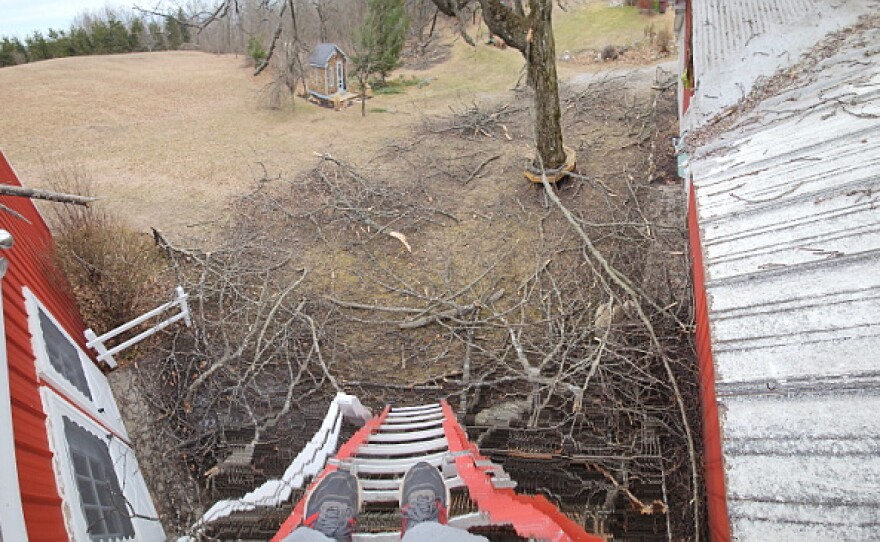
McCormick is one of many northern Michigan residents who have been clearing broken trees from their properties for months, often without much help from insurance companies. Many home insurance policies don't cover fallen trees if they don't come into contact with the home itself.
A bipartisan bill in the state legislature that would allocate $100 million for ice storm relief in northern Michigan has stalled. The legislation would make homeowners who sustained damage eligible to receive reimbursements for repairs. It hasn't received a committee hearing over six months after its passage in the state House back in May.
“A lot of us live around a lot of trees. You have to take down these trees if they're broken in half and that costs a fortune,” said state Senator John Damoose, R-Harbor Springs, who says he supports getting the passed and onto Gov. Gretchen Whitmer's desk.
“We’ve easily spent more than that”
While the federal government approved $50 million in federal disaster aid for local governments and nonprofits for damages sustained due to the ice storm, homeowners are not eligible for those reimbursements.
Damoose said that one of his constituents was told by a claims adjuster that they needed to remove five trees from their home.
“That cost her personally $18,000 to do that," Damoose said. "Now, there was some price gouging going on, but this is expensive stuff that people don't have that type of money just sitting around usually.”
McCormick works from home and he spends good portions of his days cleaning up his property. He says insurance assessed his total property damage to be $50,000. “We've easily spent more than that,” he said.
McCormick, his wife and neighbor spent three hours cutting to get to their half-mile country road on the day of the storm. He said the community in Alpena is all collectively dealing with the issue of tree removal. Many are removing trees themselves because tree removal services are overbooked.

“I'm on a committee for a local museum and there are a couple of people on that board with me that are still in the same boat that I'm in,” McCormick said. “Maybe a little bit worse because they are in their 70s instead of 50s. And they're still trying to do it themselves, same as we are.”
In addition to local housing damage, area power companies are looking for help to deal with the millions of dollars they’ve spent on repairing the power systems.
Utilities were denied direct aid from FEMA, also known as category F funding, in October. However, they're still eligible for other types of FEMA aid. The Presque Isle Electric and Gas Co-op have raised their monthly billing for members by $20 per month to help make up costs. CEO Allan Berg told WCMU they've taken on roughly $150 million in costs from the ice storm.
“I'm disappointed and frustrated”
State Rep. Parker Fairbairn, R-Harbor Springs, introduced the $100 million aid bill back in May. It passed with overwhelming support. He said he’s upset with the lack of progress in the state Senate.
“I've had conversations with the Senate Appropriations Chair, Senate leadership, trying to get just a hearing so people would be able to hear some of the stories coming out of northern Michigan,” he said. “We haven't even gotten that, so that's where I'm disappointed and frustrated.”
He added that he feels the region is being ignored, an the has not heard back from Senate leadership or the Governor’s office on progressing the bill.
“If this would have happened in Detroit or a Grand Rapids or somewhere in southern Michigan, and 12 counties got hit all at the same time with inches of ice on power lines and homes and trees, they would have received money from the state in a big dollar amount,” he said.

Damoose believes the intense state House budget negotiations put the bill on the backburner. He said he had a commitment for a hearing, but he was told it would not happen independent of the budget debate.
“I think it just became so contentious that everyone decided, let's hold off until after the budget to address this,” Damoose said. “It became political.”
The bill, Damoose says, is the amount of money the region needs, and he thinks it only needs a couple tweaks to ensure the money goes specifically to people in northern Michigan.
“My big fear on this whole thing is that it just sort of becomes yesterday's news and it doesn't get addressed at all. So we're trying to keep some of this funding alive,” Damoose said.
Gov. Gretchen Whitmer approved $10 million for response and recovery work in the latest state budget.
State Sen. Sarah Anthony, D-Lansing, who is the chair of the Senate Appropriations Committee did not respond to a request for comment.
Rick Brewer contributed reporting to this story.


